


It was 1981, and I had just returned from a gap year in France. I was working as a chambermaid in a hotel when my supervisor noticed me stumbling so badly that he insisted I go to the emergency room. I spent five days in the hospital, but without MRI technology—unavailable at the time—the doctors couldn’t give me a definitive diagnosis. Still, I had a strong suspicion: I had multiple sclerosis.
That year, my life began to change quietly but profoundly as the first symptoms of MS appeared. Back then, there were virtually no treatments available. For the next thirty years, I avoided neurologists entirely, pretending I wasn’t ill. I ran marathons, earned degrees from the University of Colorado Boulder and New York Law School, and even traveled several times to Beijing, China.
What I didn’t understand then was that every moment without a Disease Modifying Therapy (DMT) allowed MS to continue its silent damage—eroding the myelin coating that turns thought into action. Avoiding doctors and medication was, in truth, my way of denying how sick I really was. The reality was that I was very sick, oscillating between periods of near incapacity and stretches when I could almost pass for healthy.
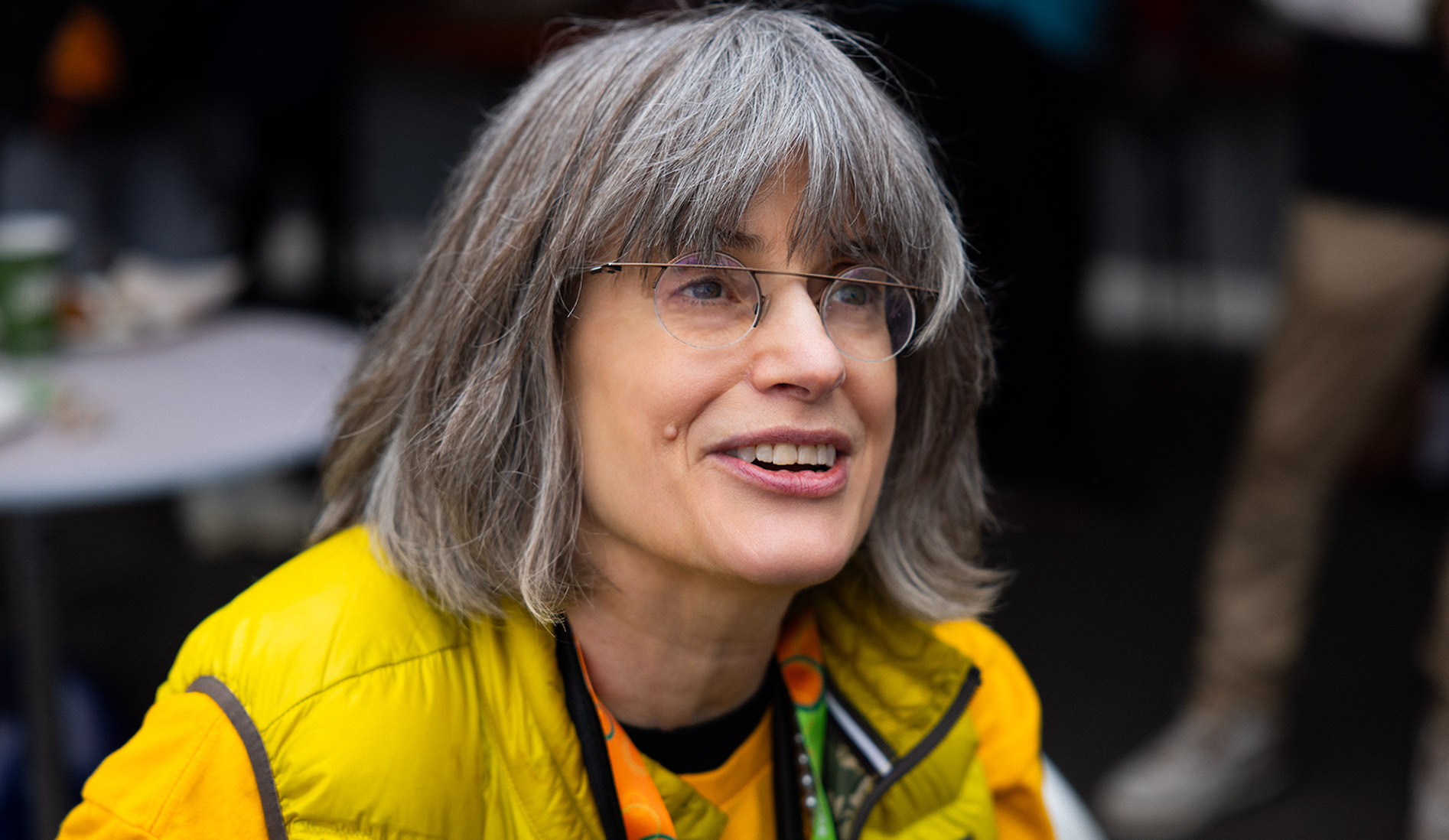
By 2000, I had begun to experience increasing disability and, though I only gradually realized it, cognitive issues as well. It was becoming harder and harder to leave the house for work—I was exhausted after just taking a shower—so I began working from home as a legal recruiter.
After the World Trade Center attacks, international legal headhunting came to a halt, and I took a part-time job at a farmer’s market, three days a week. I loved it. Once, I had to take several weeks off because I suddenly lost the ability to carry anything—I kept crashing into the walls inside the truck. Although that episode eventually resolved, it was frightening. Still, I reveled in those long, satisfying days that began at 6:30 a.m. with unloading and loading the truck. On Saturdays, we would bike the ten miles from Harlem to Cadman Plaza.
After finding my neurologist in 2011, I began to turn my life around. Disease-Modifying Therapies (DMTs) are not easy to take—MS drugs come with significant side effects, and it’s understandable that, especially early in the disease when symptoms can ebb and flow, some might decide the treatment isn’t worth the trouble. But as Dr. Gavin Giovannoni reminds us, “Time is brain” in MS.
Finally, in 2019, together with my partner, Ian Green, and my beloved cousin, Rosanne Elkins, I founded the Mind Brain Foundation—formerly the Mind Brain Philanthropic Foundation. Our goal is to offer people diagnosed with MS, and their families, the kind of support that simply didn’t exist in 1981, when my story began. More importantly, with your generous donations, we are funding the research that will one day eliminate MS altogether.